This month, our French Winophiles writers are sharing their idea of the perfect lunch in a French café. For me, one dish immediately came to mind: the Croque Monsieur. But since I’d never actually tried its richer sibling, the Croque Madame, this seemed like the perfect excuse to order one—and pair it with a bottle of André & Michel Quenard Crémant de Savoie Brut.
I have fond memories of my first Croque Monsieur. My wife and I honeymooned in Paris in 2008, and before that trip I’d never tasted one. It didn’t take long to understand why it has become one of France’s most beloved café classics. Crisp, buttery bread layered with jambon de Paris, creamy béchamel, and nutty Gruyère cheese, then toasted until golden, made for a deceptively simple sandwich that was somehow much greater than the sum of its parts.
I’ve been chasing that memory ever since.
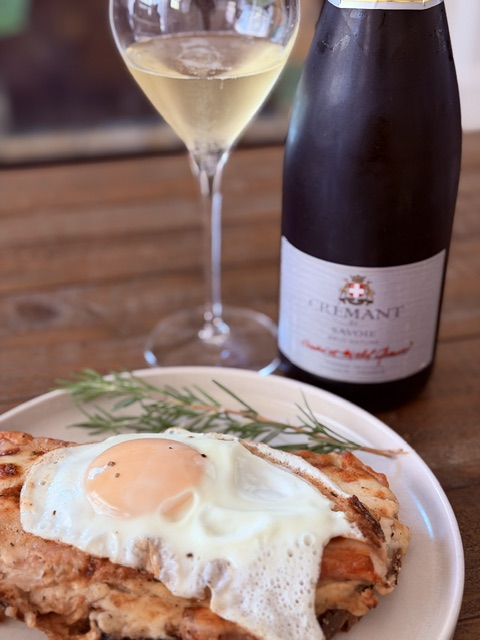
Back home, authentic Croque Monsieurs have been surprisingly difficult to find. That changed recently when a local French-inspired bakery and café added them to the menu. The first bite immediately transported me back to Paris. This time, however, I decided to order the Croque Madame, the classic variation distinguished by the addition of a fried egg. The café added its own California-inspired touch with rosemary-infused ham and a sun-dried tomato béchamel. While those additions departed from tradition, they complemented rather than overshadowed the spirit of the French original.
The richer sandwich called for sparkling wine, but rather than reach for Champagne, I wanted to explore another corner of France’s sparkling wine tradition.
A Primer on Crémant
Most wine lovers know Champagne, but fewer realize that France produces outstanding traditional-method sparkling wines in several regions under the designation Crémant. Like Champagne, Crémants undergo a second fermentation in the bottle and spend time aging on their lees, developing the fine bubbles, creamy mousse, and yeasty complexity that make traditional-method sparkling wines so compelling.
What distinguishes one Crémant from another is where it’s produced and the grape varieties permitted by the appellation. Each region expresses its own terroir through different grapes:
- Crémant d’Alsace – Pinot Blanc, Pinot Gris, Riesling, Auxerrois, and Pinot Noir
- Crémant de Bourgogne – Chardonnay and Pinot Noir
- Crémant de Loire – Chenin Blanc, Chardonnay, Cabernet Franc, and others
- Crémant du Jura – Chardonnay, Savagnin, and Pinot Noir
- Crémant de Limoux – Chardonnay, Chenin Blanc, with Mauzac adding regional character
Among the newest members of the family is Crémant de Savoie, recognized as its own appellation in 2014. Here, the dramatic Alpine landscape plays as much a role in the wine’s personality as the grapes themselves.
Savoie: France’s Alpine Wine Country
Nestled against the western Alps near the borders of Switzerland and Italy, Savoie is a region of dramatic mountain scenery, steep terraced vineyards, and cool alpine temperatures. While it’s best known for producing crisp white wines that pair beautifully with mountain cuisine such as fondue and raclette, its sparkling wines deserve far more attention.
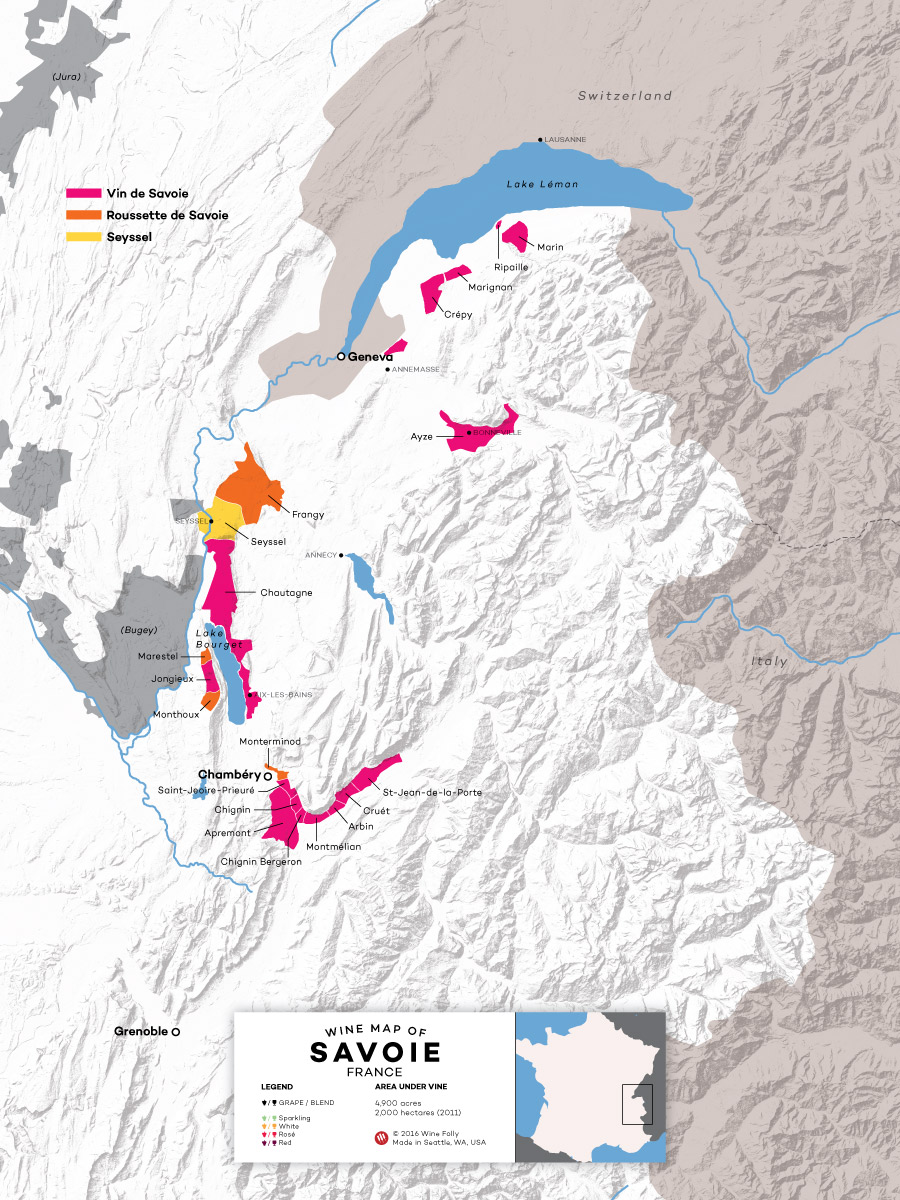
André & Michel Quenard farms approximately 22 hectares of vineyards on the steep slopes surrounding the village of Chignin. The cool mountain climate preserves the bright acidity that is essential for producing elegant traditional-method sparkling wines.
Why Jacquère Makes This Wine Different
What immediately drew me to this bottle was its primary grape variety: Jacquère.
Unlike many Crémants that rely on Chardonnay or Pinot Noir, this wine is vinified primarily from Jacquère, an indigenous Vitis vinifera variety that has been cultivated in Savoie for centuries.
Jacquère naturally produces wines that are:
- high in acidity
- light-bodied
- fresh and mineral-driven
- modest in alcohol
Those characteristics make it exceptionally well suited for traditional-method sparkling wine.
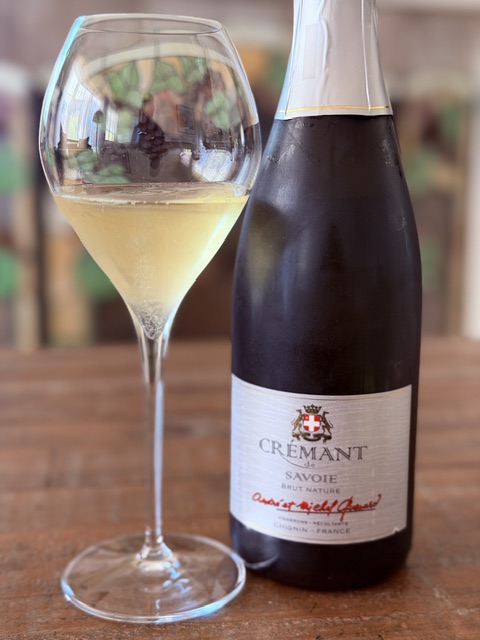
Tasting Note:
Pale straw color with enticing ripe pear, white peach, honeysuckle, lime zest and subtle flint and sourdough aromas. On the palate, it’s light-bodied and very fresh with ripe pear, white peach, lime zest flavors with a delicate flinty minerality. The creamy mousse adds texture without sacrificing freshness.
100% Jacquère | 12% ABV | SRP: $29.99
Why It Worked
A Croque Madame is undeniably rich. The buttery bread, béchamel, Gruyère, ham, and runny egg yolk create layer upon layer of richness.
The Quenard Crémant provided exactly the contrast the dish needed.
Its lively acidity refreshed the palate after each bite, while the creamy mousse and subtle yeasty character echoed the toasted bread and béchamel. The crisp orchard-fruit flavors added lift without overwhelming the sandwich’s delicate balance.
Rather than competing with the food, the wine made every bite feel lighter and every sip more refreshing.
As I enjoyed the final bites, I found myself thinking back to that honeymoon in Paris nearly two decades ago. The sandwich may have worn a few California touches, and the wine came not from Champagne but from the French Alps, yet together they captured exactly what I love about French café dining: simple ingredients, thoughtfully prepared, paired with a wine that makes the entire experience just a little more memorable.
Thristy for more ideas for the perfect lunch in a French café? Please dig in to my fellow French Winophiles offerings!
• Terri at Our Good Life shares “Summer Berry Salad with a Cabernet just Right for Summer at La Belle Vie”
• Wendy at A Day in the Life on the Farm shares “Galette Completes paired with a Vigné-Lourac Les Perles“
• Camilla at Culinary Cam shares “Pan Bagnat + Clos Sainte Magdeleine Cassis Blanc 2024“
• Robin at Crushed Grape Chronicles shares “Muscadet Mussels and Chevre Chaud – Channeling a French Bistro in the Loire“
• Jeff at Food Wine Click! shares “Lunch in a French Café: Quiche!“
Delicious option! I love the California twists. And the Jacquère Cremant! How exciting, and then to be able to bring back such a beloved memory for you!
What a wonderful meal to bring back memories of such a momentous occasion. Cheers to you and Gigi.
Nice honeymoon memory! I’ve yet to make a croque monsieur (or madame), but I have it on my “to do” list.