Despite Lambrusco’s reputation as a sweet, fizzy industrial wine, I’ve had enough good examples over the years to know the category deserves a second look. One of my longtime favorites, the Paltrinieri Lambrusco di Sorbara Radice, showed me just how compelling dry Lambrusco can be at the table.
So when the opportunity came to participate in this springtime Italian sparkling wine theme, Lambrusco immediately came to mind. Not simply because sparkling wine pairs well with food, but because Lambrusco comes from Emilia-Romagna, widely regarded as the food capital of Italy. That connection between place, cuisine, and sparkling wine felt especially fitting for a springtime table.
With that in mind, I headed to a local Italian specialty shop in search of a bottle that might capture that sense of place while also offering something stylistically different.
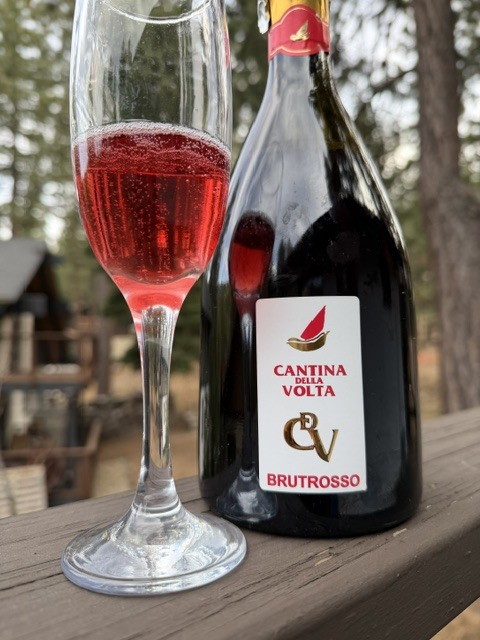
When I asked where I could find a good Lambrusco, one of the associates pointed me toward Cantina della Volta BrutRosé Metodo Classico, describing it as the “Rolls Royce” of Lambrusco. What immediately caught my attention was that it was made using the metodo classico rather than the predominantly used Martinotti (tank) method associated with most Lambrusco.
That distinction proved meaningful. While the Martinotti method emphasizes youthful fruit and frothy immediacy, metodo classico fermentation in bottle brings finer bubbles, more texture, and added complexity from lees aging. This wine retained Lambrusco’s vibrant freshness while adding a more structured, refined profile than I expected.
About Cantina della Volta
Cantina della Volta traces its roots to the Bellei family, who have been making wine in the Modena area since the 1920s. Today, the winery is led by fourth-generation winemaker Christian Bellei, who helped champion a more quality-focused vision for Lambrusco rooted in the traditional method.
Inspired by visits to Champagne, Bellei founded Cantina della Volta in 2010 with a focus on metodo classico sparkling wines, emphasizing bottle fermentation and extended lees aging rather than the more common tank method.
The winery’s name references the nearby Naviglio di Bomporto canal, where merchant boats once performed “la volta” — the turnaround — before returning toward Modena. The name serves as both a nod to local history and a symbolic turning point for Lambrusco itself.
Cantina della Volta also farms organically, reflecting a broader commitment to thoughtful farming and terroir expression.
Tasting Note:
It pours cherry red with mixed strawberry and cherry danish, pomegranate, and spiced dried rose aromas. On the palate, it’s medium bodied with refreshing, mouthwatering acidity and a hint of tannins. It shows pomegranate, strawberry, morello cherry flavors accented with a dried herb savory note. 12.5% abv. Dosage; 5.5 g/LMedium+ finish. Aged 21 months on the lees. SRP – $34
What to Look for in Quality Dry Lambrusco
For many wine drinkers, Lambrusco still conjures memories of inexpensive, sweet supermarket bottlings. But within Emilia-Romagna itself, quality-focused producers are crafting far more serious and expressive wines.
A few things worth looking for:
- Dry designations such as Brut (or “Brutto”), Extra Brut, or Secco
- Traditional method or bottle-fermented styles for finer bubbles and more texture
- Lambrusco DOCs associated with artisanal production, including Salamino di Santa Croce, di Sorbara, and Grasparossa di Castelvetro
At their best, these wines combine vibrant fruit, refreshing acidity, subtle savory character, and exceptional versatility at the table.
At their best, these wines combine vibrant fruit, refreshing acidity, subtle savory character, and exceptional versatility at the table.
At the Table
We paired this wine with leftover lasagna and eggplant parmigiana from one of our favorite local restaurants—and it was a fabulous match.
The acidity cut through the richness of the dishes, the bubbles refreshed the palate, and the wine’s subtle savory edge echoed the layered baked flavors. It’s the kind of pairing that feels effortless and completely at home at the table.
If you follow the wine back to its Emilia-Romagna origins, the pairing possibilities open even further:
- Lasagne and baked pasta dishes
- Prosciutto di Parma + Parmigiano Reggiano
- Mortadella and other cured meats
- Tagliatelle al ragù
Final Thoughts
For a springtime sparkling theme, this bottle offered a compelling reminder that Lambrusco can be far more nuanced and refined than its reputation suggests.
Metodo classico preserves Lambrusco’s joyful, food-friendly character while adding texture, structure, and complexity. At the same time, it feels remarkably current—almost like a sparkling interpretation of today’s juicy chillable reds.
Most importantly, though, it remains true to its origins in Emilia-Romagna, where wine and food are inseparable parts of the same conversation.
From Prosecco to Lambrusco and beyond, my fellow #ItalianFWT writers uncovered a wonderful range of Italian sparkling wines worth exploring.
- Robin from Crushed Grape Chronicles will feature “San Fermo Prosecco by Bellenda with Roasted Beech Mushrooms, Cheesy Polenta, and a tarragon, basil, lemon/pesto”
- Wendy from A Day in the Life on the Farm is “Celebrating our Anniversary with a Hugo Spritz”
- Jennifer from Vino Travels will look at an array of Prosecco with “Bollicine di Primavera: Italy’s Finest Sparkling Wines”
- Cathie from Side Hustle Wino is highlighting “Lambrusco-A 21st Century Look at a Century’s Old Wine”
You Might Also Enjoy:
How fascinating to get to taste a dry Lambrusco that is so deep in color! I have not dipped my toes into nearly enough Lambrusco! I’m inspired!
I got hooked on Lambrusco when we visited on of SF’s best pinserias serving pinsa(Roman style pizza) many years ago. Our server suggested a dry Lambrusco. I’ve been fan ever since. Looking back on that experience, the Lambrusco I had that night was likely the tank method version. Since, then I’ve discovered the methodo classico version such as the featured wine here. It’ll be a tasting exploration for you!
Until reading these articles today, I had no idea that you could get a dry Lambrusco. I’ve got some exploring to do. Thanks.
I didn’t either until I visited a pinseria in San Francisco years ago…where they recommended a dry Lambrusco to pair with my pinsa (Roman style pizza). Good luck on your exploration of dry Lambrusco
What beautiful color in that wine Martin! I’m happy to see Lambrusco featured this past week.
Thanks for leading the charge for this wonderful topic Jennifer. There is much to love about Lambrusco…and hey it’s from the food capital of Italy, it’s got to be good!
We haven’t had a lot of Lambrusco but a tasting last year certainly reinforced what you’re saying. Will have to see if we can find this producer up here!