Several years ago, I purchased a bottle of Paul Déthune Champagne Grand Cru Blanc de Noirs Extra Brut from First Bottle. Three things caught my attention: the attractive price, the producer’s remarkable history, and the fact that it was a Blanc de Noirs. I’m a huge fan of Blanc de Noirs sparkling wines, especially Champagne!
I enjoyed that first bottle so much that I immediately ordered three more. With Champagne Day approaching on October 23, I decided it was time to enjoy the last bottle.
I’m glad I did!
What’s So Special About Blanc de Noirs?
Blanc de Noirs, meaning “white from blacks,” is a white sparkling wine made from dark-skinned grapes. In Champagne, that means Pinot Noir, Pinot Meunier, or both. Gentle pressing and minimal skin contact allow winemakers to produce white wine from these red grapes.
I love Blanc de Noirs for its combination of vibrant acidity, expressive red-fruit flavors, and often a richer texture. It’s a style that can be equally enjoyable as an aperitif or at the dinner table.
Discovering Grower Champagne
Paul Déthune is also a grower Champagne producer (a.k.a récoltant-manipulant, meaning the family makes Champagne from grapes grown in its own vineyards.
Unlike larger Champagne houses, which typically supplement their estate-grown grapes with fruit purchased from growers, grower producers offer an opportunity to explore the distinctive character of their vineyards and winemaking philosophies.
Neither approach is inherently better. I’ve enjoyed wonderful Champagnes from both. But seeking out grower Champagne is a great way to discover smaller, family-owned producers and support the farmers behind the bubbles.
Four Centuries of Champagne Heritage
The Déthune family’s roots in Ambonnay, one of Champagne’s 17 Grand Cru villages, date to 1610. Located in the Montagne de Reims, Ambonnay is particularly renowned for Pinot Noir.
Today, Pierre Déthune and his wife Sophie carry on the family tradition with an emphasis on quality and environmental stewardship. According to the winery’s technical sheet, its vineyards have been certified organic since 2013, and the estate holds High Environmental Value and Sustainable Viticulture in Champagne certifications. Solar panels also generate enough electricity to meet the estate’s consumption.
The family’s approach to winemaking is equally intriguing, particularly its use of oak barrels and large oak tuns for fermentation and aging.
Paul Déthune Champagne Grand Cru Blanc de Noirs Extra Brut
Grapes: 100% Pinot Noir
Dosage: 5 g/L (Extra Brut)
This Champagne is a blend of 33% wine vinified and aged in 205-liter oak barrels, 33% in large oak tuns, and 34% reserve wine drawn from an extraordinary collection representing more than 40 different years.
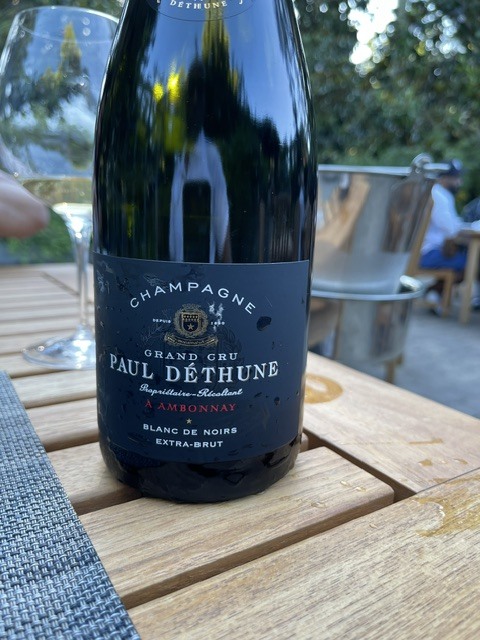
My tasting note: Very pale copper in color, with enticing aromas of Key lime zest, red fruit, pastry dough, croissant, roasted hazelnut, and toasty vanilla. Medium-bodied and harmonious on the palate, with zesty, mouthwatering acidity and a creamy mousse. Lush, ripe yet slightly tart red cherry, raspberry, and strawberry flavors mingle with lime and a hint of ripe mandarin orange. An appealing vein of salinity adds freshness and complexity, leading to a long, dry finish showcasing a chalky minerality.
Beyond the Toast: Blanc de Noirs at the Table
One of the things I especially appreciate about Blanc de Noirs Champagne is its versatility with food. Its lively acidity and bubbles refresh the palate, while its red-fruit character and texture make it a wonderful partner for more substantial dishes.
I’d happily pair this bottle with roast duck and mushrooms, seared salmon, mushroom risotto, or Surf n Turf. It’s also a terrific match for aged cheeses and charcuterie.
Final Thoughts
Revisiting this Champagne reminded me why I was so enthusiastic about that first bottle. It’s a delicious expression of Pinot Noir, offering a wonderful balance of ripe fruit, complexity, freshness, and texture.
It also reinforces two things I hope more wine lovers will discover: grower Champagne offers an exciting opportunity to explore smaller, family-owned producers, and Blanc de Noirs deserves a place at the dinner table—not just at celebrations.
If you haven’t explored either, this is a delicious place to start.
Cheers!