This week’s wine takes us to the Republic of Georgia, often called the birthplace of wine. The 2020 Vazisubani Estate 3 Qvevri Amber is a remarkable example of how history, culture, and craftsmanship come together in the glass. Made from three indigenous grapes—Rkatsiteli, Mtsvane, and Kisi—it’s crafted in qvevri, the large clay pots buried underground that Georgians have used for thousands of years. The result is a wine that feels timeless: delicious, distinctive, and deeply rooted in tradition.
Qvevri Winemaking: An Ancient Legacy
Qvevri winemaking is one of the world’s oldest continuous winemaking practices. These massive, egg-shaped clay vessels are buried beneath the earth, where their natural insulation provides a stable, cool environment for fermentation and aging. Unlike modern stainless steel or oak, qvevri winemaking emphasizes purity and texture, with extended skin contact adding amber hues, gentle tannins, and layers of complexity. Recognized by UNESCO in 2013 as part of the Intangible Cultural Heritage of Humanity, this ancient method is more than a technique—it’s a living expression of Georgia’s identity.1
For a deeper dive, I recommend reading All You Needed to Know About Qvevri but Were Afraid to Ask—an excellent exploration of the history and nuances of this craft.
Vazisubani Estate: A Storied Heritage
The story of Vazisubani Estate begins in the 19th century with the noble Chavchavadze family, one of Georgia’s most storied lineages. For generations, the Chavchavadzes were celebrated for their leadership, philanthropy, and commitment to education—including viniculture. Over the last decade, the estate has been meticulously restored, blending its aristocratic past with modern relevance. Today, it stands as both a premier wine tourism destination and a source of distinctive Georgian wines, complete with a restored palace, gardens, traditional marani (wine cellar), and 35 hectares of estate vineyards.2
In The Glass
This wine is a blend of indigenous grapes comprising 40% Rkatsiteli, 30% Mtsvane, and 30% Kisi. The grape were hand harvested, partially-destemmed and loaded as bunches directly into qvevri for fermentation and kept on skins for nine months, followed by aging in qvevri for another 2-3 months, then stainless steel for 12-18 months at cool temperatures, preserving freshness and balance.
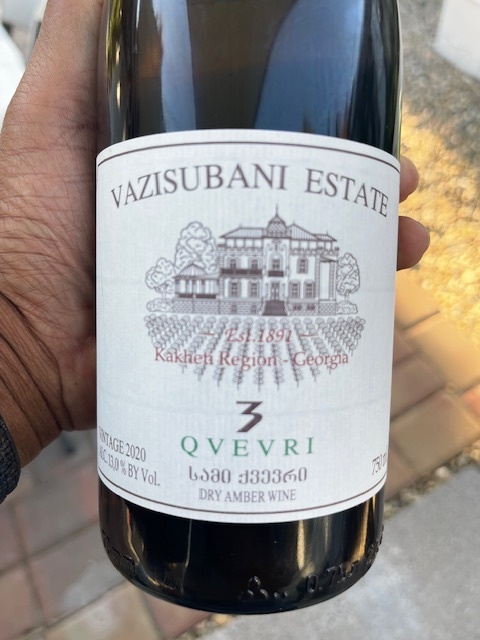
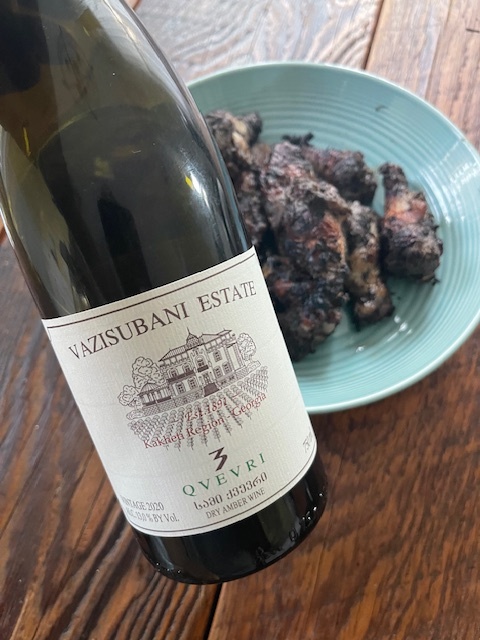
Tasting note: Pale amber color with green tea, dried apricot, dried pineapple, honey, citrus, and subtle spice aromas. On the palate, it’s medium-bodied, with mouth-watering acidity and apricot, honey, apple, green tea, zesty lemon drop and spice flavors. Medium + finish. (13% abv | SRP: $24 | Available at Total Wine or check with the importer | 88 pts)
Pairing Notes
Amber wines are some of my favorite food partners because of their versatility. One night we paired this bottle with grilled jerk chicken wings—the smoky heat was lifted beautifully by the wine’s acidity and texture. The next night it was Thai-style spicy eggplant with beef and curry, and again the wine held its ground.
Pro tip: Serve skin-fermented whites (orange/amber wines) at 12–18°C (55–65°F)—similar to a light-to-medium red. In practical terms, chill it in the fridge, then let it sit out for about 20 minutes before serving.
Final Thoughts
The 2020 Vazisubani Estate 3 Qvevri Amber isn’t just a bottle of wine—it’s a bridge across centuries, connecting us to an ancient culture that continues to thrive. At an approachable price point, it’s an excellent entry into the world of amber wines, offering both authenticity and adventure. If you’re curious about Georgia’s heritage or simply want a food-friendly wine that sparks conversation, this one deserves a spot at your table.
We have a wonderful Georgian restaurant here in NYC and I’ve enjoyed sampling the wines on offer. Still a lot to learn. Thanks for sharing your notes, Martin!
Years ago when I started my wine journey, I went to a restaurant that had a flight of Georgian wines. I’ve been a fan ever since (though they are hard to come by). Cheers Lauren!
We’ve yet to try a wine from Georgia and you’ve inspired us to change that as soon as possible, cheers!
Thanks for stopping by and sharing! I appreciate your support. I do hope you get a chance to try Georgian wines sooner rather than later. They are truly a taste of history!