Each week, I feature a wine that leaves a lasting impression—sometimes for its distinctive character, sometimes for its story. But every now and then, it’s the sheer joy a wine brings that makes it impossible to ignore.
The 2024 Sandlands Mourvèdre Rosé is one of those wines.
Sourced from organically farmed, head-trained, dry-farmed vines planted in 1922, this rosé delivers pure, uncomplicated pleasure. It’s bright, textured, and quietly transporting—a bottle that evokes the relaxed elegance of Provence while remaining distinctly Californian. It’s a wine that doesn’t ask much, yet gives so much: charm, refreshment, and a little escape in every glass.brings.
About Sandlands
Sandlands is the personal project of Tegan Passalacqua, a winemaker deeply committed to exploring California’s forgotten vineyards and heritage varieties. As the winery puts it, the focus is on “classic California varieties, primarily grown in decomposed granite (sand), from regions and vineyards that have been farmed for many generations but have remained the outliers of California viticulture.”
Passalacqua’s lineup includes thoughtful bottlings of Chenin Blanc, Cinsault, Mataro (Mourvèdre), Carignane, Trousseau, and Assyrtiko—varieties often overlooked in the modern California landscape. And he’s not stopping there. His newest plantings include Carricante and Nerello Mascalese, two noble Sicilian grapes now taking root on volcanic soils in the Sierra Foothills—fittingly, in a town named Volcano.
2024 Sandlands Mourvèdre Rosé
The fruit for this rosé comes from Contra Costa County, where century-old vines grow in sandy soils that keep yields low and concentration high. These organically farmed, head-trained vines—planted in 1922—are rooted in an ancient alluvial sand bar formed at the meeting point of the Sacramento and San Joaquin rivers. This sandy loam soil allowed the vines to survive the phylloxera epidemic, as the root louse cannot thrive in sand, making these some of California’s healthiest and rarest old vines.
The wine is whole cluster pressed and fermented in stainless steel, then aged in neutral French oak to add subtle texture and depth without overshadowing its freshness.
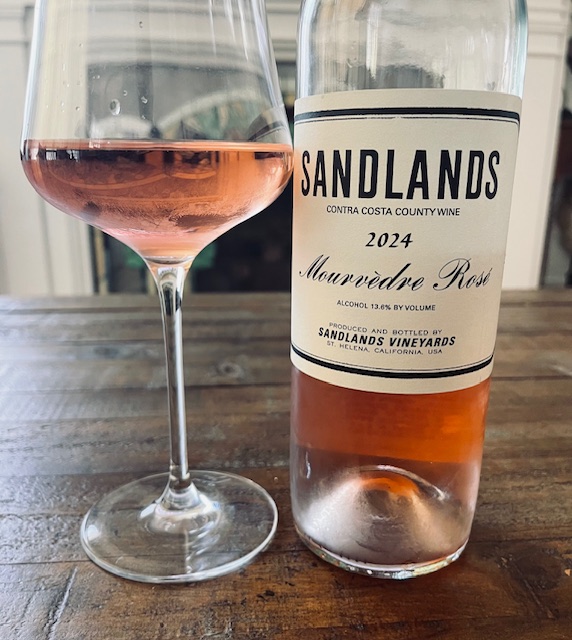
Tasting Note: Pale salmon color with ripe peach, red berries, sea salt, and wet clay aromas. On the palate, it’s medium-bodied with zesty, mouthwatering acidity and enticing flavors of ripe peach, strawberry, raspberry, golden cherry, blood orange zest flavors with a very appealing textured and lingering finish.
13.6% ABV | SRP: $28|91pts
Terrific value!
Final Thoughts
With roots in the sun-drenched traditions of Provence and a clear nod to icons like Clos Cibonne and Domaine Tempier, this wine was made to transport—to an open-air table, surrounded by friends, food, and golden light.
It doesn’t just remind you of Provence. It lets you taste it.
I am sold Martin! Your description is enough to get me there, but I am always intrigued by Contra Costa county wines as I used to live there! Sadly was completely unaware of the vineyards within the county at the time. The pre-phylloxera history is enough to intrigue anyone who loves wine I would think.
Also, love the label and I can’t even tell you why, but I think it is a stunning attention getter for sure.
We love roses made with grapes like Mourvedre that have those spicy characteristics and this sounds very much like one we’d enjoy. As always, appreciate the recommendation!